Aloitussivulle

|
Suolasirotin, 1900-1901
.jpg)
.jpg)
Leimat
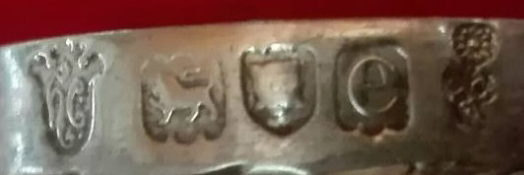
Leimojen tulkinnat
|
|
|
|
|
.gif) |
|
|
|
.gif)
.gif)
.gif)
.gif)
.bmp)
.bmp)
.bmp)
.bmp)
.bmp)
Hankintatiedot
Hinta ?? €
Child & Child
Founded 1880
Walter Child (1840 – 1930) and his younger brother Harold (1848 – 1915) founded their business Child & Child in 1880. Two years previously they had received a not insubstantial inheritance from their father, a London pawnbroker, and they decided to use this to set up their own manufacturing firm.
They established themselves at 1, Seville Street in Knightsbridge and registered their maker’s mark with Goldsmiths Hall as silver plate workers. It wasn’t until they moved to 35 Alfred Place West (now Thurloe Street) in South Kensington in 1891 that they began to make the jewellery for which they are best remembered today. Whilst they created gem-set jewellery in both traditional and revivalist styles it is their Arts and Crafts enamel and silver pieces for which they became renowned.
Bright shades of green, turquoise and blue enamel are typical of their work which frequently featured motifs such as wings, leaves, feathers, hearts and butterflies on brooches, pendants and buckles. Sometimes the enamel work was the only source of colour in a piece, other times it was combined with gemstones as in the beautiful brooch set with a large amethyst encircled by a vivid green enamel snake which is now part of the Victorian & Albert Museum collection. The firm attracted a wide circle of clients including Pre-Raphaelite artists such as William Holman Hunt and Sir Edward Burne-Jones for whom the firm often created jewels to his own personal designs. The celebrated architect Sir Edwin Lutyens was another well known client who commissioned the firm to make pieces for him, such as the ebony, silver and pearl crucifix he designed as a gift for his wife-to-be whilst they were courting.
The partnership between the brothers was dissolved in 1899 but Harold carried on alone at the same address enjoying the patronage of several members of the Royal Family including Queen Victoria, King Edward VII and King George V and at the beginning of the 20th Century he was granted the Royal Warrant by Her Majesty Queen Alexandra.
When Harold passed away in 1915 the firm closed its doors. Despite operating for only 35 years and producing jewellery for significantly less than that, their work remains popular and is regarded today as some of the most representative of the Arts and Crafts style. Their enamel jewellery in particular is very collectable and their unofficial trademark of a sunflower between two Cs is guaranteed to elicit excitement whenever it is discovered on a piece of jewellery.[6]
Lähteet
[1] Silvercollection English silver hallmarks: British maker's marks identification HC-HE
[2] Online Encyclopedia of Silver Marks, Hallmarks & Makers' Marks British Hallmarks
[3] Silvercollection Leopard's Head
[4] London Date Letters London Hallmarks
[5] Silver Makers' Marks - London Assay Office (C) London Makers Marks - C&-CC
[6] Hancocks London Child & Child

© Meripeninkulmatehdas Oy
Kaikki oikeassaolijat pidätetään